Saturday, March 22, 2014

Hardening Off

Before you move your plants to their permanent location, you should harden them off. That means gradually acclimating them to the outdoors. They've been protected all of their lives and if you were to just throw them outside without preparing them, they may die and all your hard work would be for naught. Your plants have had pretty constant temperatures and light and a sudden change could have drastic consequences.


Before taking them outside, check their size. If you started your seeds in a flat they are most likely ready for a bigger container. Carefully loosen them from their present home and move them to a bigger one. Now  is usually  a good time to add some organic fertilizer. Give them a gentle watering and let them get accustomed to their new digs for a couple days. Once you can see that they have adjusted well, it's time to start the hardening off process. To begin, I take mine out for an hour at the warmest part of the afternoon. Make sure they are sheltered from any harsh winds or rains. The next day, extend their time outdoors for an extra half an hour. Keep up this routine until the temperatures outside are ideal for your particular plant. Once the danger of frost is past, it is safe to plant them in your garden.


Tuesday, March 11, 2014

Composting

Composting is the process in which waste is recycled into nutrient rich soil. It has been referred to as "Black Gold" because of how very valuable it is when you add it to your lawn or garden. When your garden is rich in nutrients there is no need for synthetic fertilizers. You are naturally amending the soil and that is good for the Earth and for the health of your family.

What can you compost? From your kitchen you can use leftover produce, coffee grounds, egg shells and tea bags. Fresh grass clippings from your yard are great as well. These items will provide nitrogen. When you compost these you are reusing cooking waste and reducing landfill refuse. Food left to rot in landfills produces methane, a toxic greenhouse gas. The Environmental Protection Agency states that as much as 30% of garbage taken to landfills could be composted.


You also will want to add "brown" waste to your compost pile. This includes paper, cardboard, straw, leaves and small twigs.  These provide carbon, which is essential in the breaking down of all the ingredients into the humus you want. Basically, you want a ratio of 3 parts brown to 1 part green.


You'll need to choose something to keep your kitchen waste in until you can get it outside. You can use an empty coffee tin or any container with a lid. Another alternative is to purchase a bin that is designed to hold your compost. I have one that is so cute, it sits on my counter right beside my stand mixer! It comes with a carbon air filter that absorbs odors. I bought mine from World Market.


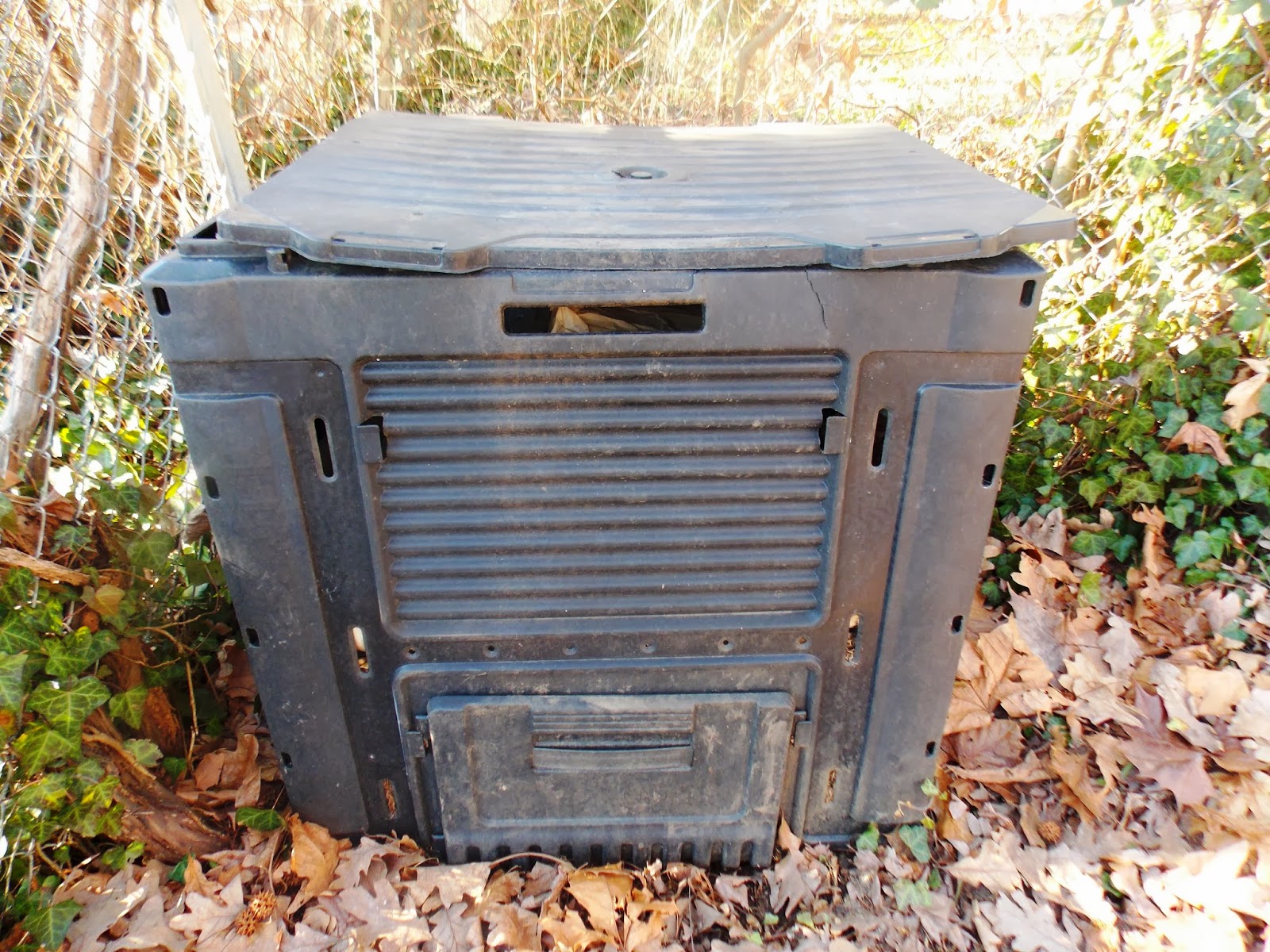
You'll also to have choose a method of containing your compost outside. It's best if it is enclosed but it is possible to just have a pile in your yard. You can get one ready made at Home Depot like I did or your can build one yourself out of wood.


To have a successful compost pile you must do several things. Place small twigs on the bottom of your heap to provide drainage and air circulation. Alternate layers of "green" (waste that provides nitrogen) and "brown" (waste that provides carbon). Water the mix and cover. You'll want to keep it moist and you will need to turn the mixture every so often to aid in the breakdown of the materials. The smaller the pieces are, the faster they will decompose. It's ready when it's dark in color and there are no chunks of the materials you added. Be patient and keep at it! It takes time to produce your black gold but in the end you will be rewarded with a rich soil amendment that will give you an abundant garden.

Tuesday, March 4, 2014

Seedling Care

So you've planted your seeds indoors and put them in a warm place to germinate. You check the water level every day to make sure the soil does not dry out. One morning you take a peek and there they are! Your precious seedlings have sprouted. Congratulations! Now is the time to rejoice. You've successfully completed step one on your journey to growing a bountiful garden. 

 Next, you need to provide your little babies with sunlight. You can place them in a south facing window or put them under fluorescent lights. Whichever you choose, make sure your sprouts are growing up straight. If they start to lean to one side, move the container around so that light is equally distributed around the plants. Sometimes I'll even move them to the back of my car if it's a really bright day. The greenhouse effect inside your vehicle gives them tons of toasty light.

Continue to monitor the water level carefully. You never want the soil to dry out but you also want to make sure you don't over water. Both are detrimental to your young plants! Watering from the bottom is a safe method to make sure they're getting the right amount of moisture. Place your containers on a tray or baking sheet and pour water into the bottom. Your plants will soak up what they need through the holes in the bottom of their containers. 

Following these steps each day will help your seedlings develop and mature into hardy plants that will soon be ready for the outdoors.


Tuesday, February 25, 2014

Seed Starting

If you're thinking about having a garden this year, now is a good time to start your seeds inside. It's a lot easier than you may think and it's definitely less expensive than buying established plants. Growing your own food is rewarding in so many ways. It's better for the environment because you're not relying on gas guzzling trucks to deliver food to stores. Home grown produce is also healthier and better tasting. And it's extremely satisfying to work and care for your plants and see them turn into beautiful, delicious food that will nourish your entire family.

To begin, you need to choose your seeds wisely. I recommend choosing certified organic, ecologically grown, or heirloom seeds. You can find these at your local garden shop or you can easily order them on-line. Make sure that the seeds are not genetically modified!

Your next step is to choose a method in which to sow your seeds. You can use seed starting flats or you can use recycled materials that you probably already have around your house. Egg cartons or empty food containers are good choices.


You'll need to fill your flats with a seed starting potting mix. Water to moisten and use a pencil to make a small hole in the soil. Next, place 2-3 seeds in the hole and gently cover. Water again just until it starts to drain from the bottom. Make sure you label your seeds so you won't forget what you planted! Now cover and place in a warm location. I put mine on top of the freezer but if you don't have the space you can buy a warming mat. Check your seed packet for more detailed instructions on how long it will take for your specific plant to germinate.

Easier than you thought, right? Pick up a packet and try it. You'll be amazed at how tiny seeds turn into something so marvelous!

Monday, February 17, 2014

Avoiding Plastics

Plastics are everywhere these days. They hold our beverages, are wrapped around our meat and cheeses, contain our butter and yogurt, and comprise a great deal of the toys our kids play with. They are so commonplace that we rarely think of them at all. That is a mistake too many of us are guilty of. Why should we pay more attention to our use of plastics? One of the biggest reasons is that they are composed of harmful chemicals that can leach into our food and air. Many consist of phthalates, chemicals that soften plastics and makes them more flexible. They are often listed as DPB, BzBP, DEHP, or DMP on the ingredients list of products. Phthalates are thought to lead to reproductive issues and may cause cancer as well. If you are aiming for a healthier lifestyle, then cutting down on or eliminating plastics is a must.

The most important plastics to avoid are those labeled #3 and #7. #3 plastics are PVC's. They are found in pipes, shower curtain liners, toys, food wraps and bottles containing oils and dressings. Go to the website for Health, Environment and Justice for a more complete list of items that contain PVC.  #7 plastics contain BPA, a chemical believed to cause endocrine issues, obesity and behavioral problems. The FDA has banned  BPA in baby bottles and sippy cups. If the Food and Drug Administration is aware of the harmful effects these chemicals have on children, why allow them at all? Why risk out health? At the very least they could force manufacturers to label when BPA is used in a product.

The ideal thing is to phase out as much plastic as possible from our lives. Switch to ceramic or glass containers. Stainless steel is another good option. Ask for your meats and cheeses to be wrapped in paper. Transfer items wrapped in plastic to other containers as soon as possible. Never heat plastic or put hot food or beverages in it. Heat causes the chemicals to seep into your food. Do not reuse plastic water bottles or leave them sitting in the sun. 


By reducing our use of plastics, not only will we be improving our health but we will also be helping the Earth. Plastics are made from petrochemicals which harm the environment when they are manufactured and also takes thousands of years to break down. We will all breathe easier when we make an effort to reduce the amount of plastics in our lives.

Tuesday, February 11, 2014

Pesticides in Food

So why do farmers use synthetic pesticides on their crops? To kill insects and weeds, of course. So if these products are designed to kill, what are they doing to us when we ingest them? Numerous studies have shown that we store pesticides in our bodies and that they are linked to cancer, ADHD, Alzheimer's, and endocrine problems. Research done at Berkeley has shown that the prevalent herbicide, Atrazine, has actually turned male frogs into females.
                                                     photo: newscenter.berkeley.edu

 The EPA has admitted that the long term exposure of pesticides can cause cancer. Respected doctors including Andrew Weil and Sanjay Gupta warn consumers about the dangers of ingesting these chemicals. The Environmental Working Group has a Dirty Dozen List of fruits and vegetables to avoid because of their high concentration of pesticides.


  • Apples
  • Strawberries
  • Grapes
  • Peaches
  • Nectarines
  • Tomatoes
  • Celery
  • Potatoes
  • Cucumbers
  • Peppers
  • Spinach and other greens
  • Summer Squash

Even after the above is washed, they still contain pesticide residue!

The EWG states that we can reduce our exposure by 80% if we eliminate foods on the Dirty Dozen List  or by purchasing organic versions of them. There is an abundance of organic produce available at your local market, in the fresh, canned and frozen sections. Or you can try growing some yourself this summer.


If we as consumers demand more organically grown produce, their availability will rise and their prices will drop. It is up to us to put more thought into what we eat. Refusing to purchase food doused with synthetic pesticides will promote healthier people and a healthier planet.


Wednesday, February 5, 2014

Green Cleaning

As the end of winter is (hopefully) in sight, many of us are starting to think about spring cleaning.  But before you start to dive in, take a few moments to look at the products you've been using. Studies have shown that indoor air has more pollutants than outdoor air. For most of us, that's where we spend the majority of our time. The chemicals found in conventional cleaners can trigger allergies and asthma symptoms. These irritants are behind our headaches and fatigue. They can cause reproductive issues and can be fatal if ingested. Children are especially susceptible to these carcinogens. They even affect our beloved pets! Take a moment to examine the products you own. Is there a "DANGER" or "WARNING" on the bottle? If so, get rid of them!

There are "green" cleaners readily available in stores that do not contain harmful chemicals. A few good brands are:
  • Method
  • Seventh Generation
  • Meyers


Another alternative is to make your own cleaners. All you need are a few products that you probably already own and some spray bottles. You'll save money and your well being!

Vinegar: natural de-greaser, kills viruses and bacteria
Baking Soda: removes odors, excellent at scouring and scrubbing
Lemon: antibacterial, removes odors


Simple Cleaner & Disinfectant
2 cups Water
1/2 cup White Vinegar
Mix together in a spray bottle.After spraying on a hard surface, let sit for at least 10 minutes to kill germs.

Toilet Bowl Cleaner
1/2 cup Baking Soda
Pour into bowl and let sit for 30 minutes. Scrub with a brush and flush.

Furniture Polish
1/2 cup olive oil
1/4 cup lemon juice
Mix well and wipe with a soft cloth.


Whether you decide to make your own cleaners or buy green ones from the store, replacing the toxic, chemical filled ones you already own will improve your life and your loved ones!